If Delta Force low FPS is making the game difficult to play, the first thing to understand is that low FPS and stuttering are not always the same problem.
You might see 40 FPS constantly, sudden drops from 120 to 50 FPS, or apparently good average FPS with terrible 1% lows. Each situation points toward a different cause.
This guide focuses on the practical fixes players need when Delta Force low FPS occurs on PC, including GPU settings, CPU bottlenecks, VRAM, Windows, drivers, shaders, background applications, and game-specific problems.
Find Details on Delta Force Lag Fix to resolve Delta Force lag issues.
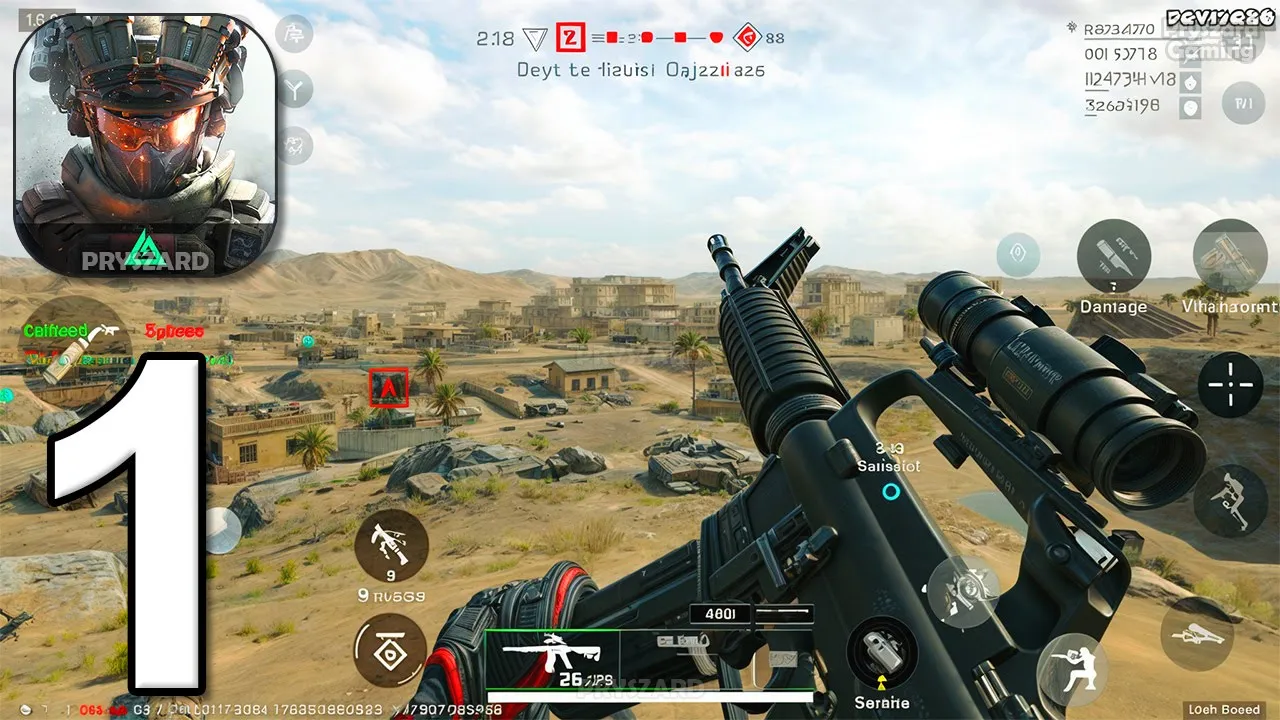
Why Is Delta Force Running at Low FPS?
Several different factors can cause Delta Force low FPS:
- Your GPU is being fully utilized
- Your CPU is limiting performance
- Your GPU does not have enough VRAM
- Graphics settings are too demanding
- Resolution is too high
- Background applications are consuming resources
- GPU drivers are causing problems
- Game files are damaged
- Shader compilation is causing temporary performance drops
- Thermal throttling is reducing CPU/GPU speed
- The game itself has a performance problem
- Your PC does not meet the game’s recommended hardware requirements
The important part is identifying which one applies to your PC.
Check Your Hardware Before Changing Settings
Delta Force’s official PC requirements provide a useful starting point.
Garena lists 12 GB RAM and a GTX 960/R9 380-class GPU as minimum specifications, while its recommended configuration moves to 16 GB RAM and a GTX 1060/RX 5700 XT-class GPU. Higher-resolution configurations require substantially more powerful hardware.
| Hardware | Minimum | Recommended |
|---|---|---|
| RAM | 12 GB | 16 GB |
| GPU | GTX 960 / R9 380 | GTX 1060 / RX 5700 XT |
| CPU | i3-4150 / FX-6300 | i5-6500 / Ryzen 5 1500X |
| Storage | SSD recommended | SSD |
Meeting the minimum requirements does not mean you should expect high FPS at high settings.
Minimum specifications are essentially the game’s way of saying, “Please let us run.” They are not a performance guarantee.
1. Check GPU Usage When FPS Drops
This should be your first diagnostic step.
Open a monitoring tool and watch:
- GPU usage
- GPU temperature
- GPU clock speed
- VRAM usage
- CPU usage
- CPU temperature
- RAM usage
- FPS
- 1% lows
If GPU usage is 95–100%
Your GPU is probably the bottleneck.
Try lowering:
- Resolution
- Shadows
- Effects
- Reflections
- Volumetric effects
- Other GPU-heavy settings
If GPU usage is only 40–70%
Lowering graphics settings may not solve the problem.
You could instead be dealing with:
- CPU limitation
- Background software
- Memory pressure
- Game-engine behavior
- Driver problems
- Shader compilation
- Game-specific optimization
This distinction can save you from changing every graphics setting for absolutely no reason.
2. Lower Delta Force Graphics Settings
If your GPU is the bottleneck, graphics settings are the obvious place to start.
Begin with:
Resolution
Resolution has a major effect on GPU workload.
For troubleshooting, test 1920×1080 first.
If you’re currently playing at:
- 1440p
- 4K
temporarily switch to 1080p.
If FPS improves substantially, your GPU is likely the limiting factor.
Lower Shadow Quality
Shadows can consume significant GPU resources.
If you’re struggling with FPS, reduce shadow quality before destroying texture quality.
Lower Effects Quality
Effects can become expensive during:
- Explosions
- Smoke
- Fire
- Large firefights
- Vehicle combat
If FPS collapses specifically during heavy combat, effects are worth testing.
Reduce Reflections and Volumetric Effects
These settings can increase GPU workload without necessarily providing a major competitive advantage.
For competitive gameplay, prioritize:
stable FPS > unnecessary visual effects.
3. Don’t Automatically Set Everything to Low
This is an important distinction.
If your GPU is already underutilized, setting every option to Low may not increase FPS.
For example:
GPU usage: 55%
FPS: 60
Dropping textures from High to Low might barely change anything.
You need to determine whether the GPU, CPU or another component is limiting performance.
4. Check CPU Usage
Delta Force can become CPU-limited, especially when:
- There are many players
- There are vehicles
- Large battles are occurring
- Background programs are active
- You’re targeting very high FPS
If one or more CPU cores are heavily loaded while GPU usage remains relatively low, your processor may be limiting the game.
CPU bottleneck symptoms
You may notice:
- GPU usage below expected levels
- FPS doesn’t increase much after lowering graphics
- FPS drops during large battles
- Low 1% FPS
- High CPU utilization
- Stuttering when many objects are visible
5. Check Your RAM
16 GB is a sensible baseline for modern gaming, and Garena’s recommended Delta Force configuration specifies 16 GB RAM.
If you’re using:
8 GB RAM
you may experience problems when Delta Force runs alongside:
- Chrome
- Discord
- OBS
- Spotify
- Game launchers
- Recording software
Close unnecessary applications before testing.
If you have 16 GB but RAM usage is constantly near its limit, investigate what is consuming the memory.
6. Check VRAM Usage
GPU memory is another common source of performance problems.
If your VRAM is nearly full, try lowering:
- Texture quality
- Resolution
- Texture-related settings
- Other VRAM-heavy options
Don’t confuse:
GPU usage
with:
VRAM usage.
They’re different measurements.
A GPU can have low utilization while its VRAM is under significant pressure.
7. Use an SSD
Garena recommends installing Delta Force on an SSD.
If the game is installed on a mechanical HDD, moving it to an SSD can improve loading and asset-streaming behavior.
It isn’t a guaranteed FPS upgrade.
Think of it as reducing storage-related bottlenecks rather than magically adding horsepower.
8. Update Your GPU Driver
If you’re using an outdated NVIDIA or AMD driver, update it using the manufacturer’s official software.
However, there’s an important exception.
If Delta Force low FPS started immediately after a driver update, the newest driver may actually be part of the problem.
In that situation:
- Record your current driver version.
- Check whether other games have the same problem.
- Search recent Delta Force reports for the driver.
- Consider reverting only if there is evidence of a driver-specific problem.
Don’t install random driver packages from third-party websites.
9. Verify Delta Force Game Files
Corrupted or incomplete files can cause unexpected problems.
If your FPS suddenly became worse after:
- A game update
- A crash
- Interrupted installation
- Moving the game
- Changing launchers
use your launcher’s Verify/Repair game files option.
This is much safer than manually deleting random folders.
10. Restart the Game After Updates
After a major Delta Force update, completely close the game and launcher before testing again.
The developers regularly release updates containing fixes and performance changes.
If the game behaves differently immediately after an update, don’t spend six hours modifying Windows before checking whether other players are reporting the same problem.
11. Disable Background Applications
Background applications can consume CPU, RAM, GPU resources or disk bandwidth.
Temporarily close:
- Chrome
- Discord
- OBS
- Screen recorders
- RGB utilities
- Hardware monitoring software
- Other game launchers
- Cloud-sync software
Then test Delta Force again.
If FPS improves, reopen applications one at a time until you identify the culprit.
12. Disable Overlays
For troubleshooting, temporarily disable:
- Discord Overlay
- Steam Overlay
- NVIDIA Overlay
- AMD Overlay
- Xbox Game Bar
- Other recording overlays
If your FPS improves, re-enable them individually.
This is better than permanently disabling everything because you saw one optimization video filmed in a basement.
13. Check Your Power Mode
On a laptop especially, verify that you’re actually running in a performance-oriented power mode when gaming.
Also make sure the game is using the dedicated GPU rather than integrated graphics.
This is particularly important for gaming laptops with:
- Intel integrated graphics + NVIDIA GPU
- AMD integrated graphics + dedicated GPU
If Delta Force accidentally uses integrated graphics, performance can be dramatically worse.
14. Check Your GPU Temperature
Thermal throttling can cause Delta Force low FPS even when your hardware is powerful enough.
Monitor GPU temperature while playing.
If FPS starts high and gradually decreases after several minutes, compare:
GPU temperature + GPU clock speed + FPS
If temperature rises while clock speed drops, thermal throttling becomes a possibility.
Also check CPU temperature.
15. Check CPU Temperature
CPU thermal throttling can produce:
- Lower clock speeds
- FPS drops
- Poor 1% lows
- Stuttering
- Performance degradation during long sessions
If your FPS is fine immediately after launching the game but becomes worse after 20–30 minutes, temperature deserves investigation.
16. Test With V-Sync Off
V-Sync can affect frame pacing and input latency.
For troubleshooting, start with:
V-Sync: Off
Then test the game.
If you use G-Sync or FreeSync, configure your display around your VRR setup rather than randomly combining every synchronization technology available.
Internal link: Add your Delta Force Lag Fix article here because that article covers broader frame-time and latency troubleshooting.
17. Use a Stable FPS Cap
A stable FPS cap can sometimes produce smoother frame delivery than allowing the GPU to constantly push against its maximum.
For example, if your system fluctuates between:
80–150 FPS
you may get a better experience with a cap your PC can consistently maintain.
The correct value depends on your:
- Monitor refresh rate
- GPU
- CPU
- Resolution
- Graphics settings
The goal is consistency, not an impressive number that collapses during combat.
18. Test NVIDIA Reflex or AMD Anti-Lag
If your system provides the appropriate latency-reduction technology, test it.
For NVIDIA users, that may mean NVIDIA Reflex.
For AMD users, AMD Anti-Lag may be available.
These features are primarily related to latency rather than raw FPS.
So don’t expect Reflex to turn 45 FPS into 200 FPS. It isn’t a second GPU hiding inside your settings menu.
19. Check Mouse Polling Rate If FPS Feels Worse During Movement
Some Delta Force players have reported stuttering associated with high mouse polling rates.
If you’re using:
- 4000 Hz
- 8000 Hz
temporarily test:
1000 Hz
If the stuttering disappears, you have identified a possible cause.
This is particularly worth testing if the FPS problem happens when moving your mouse rapidly rather than simply while looking at a static scene.
20. Check Shader-Related Stuttering
Shader compilation can cause temporary stuttering in games.
If the problem appeared:
- After a major update
- After changing drivers
- After reinstalling the game
- On the first few matches after an update
give the game some time to rebuild/cache required shaders.
If the problem persists indefinitely, verify the game files and investigate current Delta Force community reports before deleting configuration folders.
21. Don’t Disable Resizable BAR Without Testing
Resizable BAR can affect gaming performance differently depending on hardware and software.
Some Delta Force players have experimented with disabling it, but community reports aren’t consistent enough to call this a universal fix.
Therefore:
Don’t disable Resizable BAR simply because someone claims it gives +50 FPS.
If you’re troubleshooting an unusual system, you can test it, record the result, and restore the original configuration if there is no improvement.
22. Check Whether the Problem Started After a Delta Force Update
This is one of the strongest clues.
Ask yourself:
Was Delta Force running normally before the latest update?
If yes, and now:
- FPS is dramatically lower
- Other games remain normal
- Your temperatures haven’t changed
- Your drivers haven’t changed
- Lowering settings doesn’t help
then a game-side performance regression becomes more plausible.
Recent community discussions have included players reporting major FPS drops after updates despite capable hardware.
Don’t assume every problem is your PC’s fault.
Delta Force Low FPS: Quick Diagnostic Table
| Problem | What to check |
|---|---|
| GPU at 99% | Lower graphics/resolution |
| GPU below 70% | Investigate CPU/game engine/background apps |
| VRAM nearly full | Lower textures/resolution |
| RAM nearly full | Close apps / consider more RAM |
| CPU heavily loaded | Check CPU bottleneck |
| FPS decreases over time | Check temperatures |
| Stutter while moving mouse | Test 1000 Hz polling |
| Problem after driver update | Test another driver |
| Problem after game update | Check current game reports |
| High FPS but choppy | Check 1% lows/frame time |
| High ping + stable FPS | Network problem |
| Low FPS + stable ping | Performance problem |
What Settings Should I Use for Better Delta Force FPS?
There is no single setting combination that is best for every PC.
For troubleshooting, start with:
| Setting | Recommended starting point |
|---|---|
| Resolution | 1920×1080 |
| Display | Fullscreen |
| V-Sync | Off |
| Motion Blur | Off |
| Graphics Preset | Medium |
| Shadows | Low/Medium |
| Effects | Low/Medium |
| Reflections | Low |
| Texture | Medium if VRAM is limited |
| Frame Generation | Off while diagnosing |
| FPS Cap | Stable target |
| Mouse Polling | 1000 Hz for testing |
| Overlays | Off temporarily |
Once you establish stable performance, increase individual settings one at a time.
Why Does Delta Force Have Good FPS but Still Feel Bad?
This is where FPS alone becomes misleading.
Suppose you have:
Average FPS: 140
but:
1% low: 45 FPS
The game can still feel extremely inconsistent.
You should therefore monitor:
- Average FPS
- 1% lows
- Frame time
- GPU utilization
- CPU utilization
A stable 110 FPS can feel better than an unstable 160 FPS.
Delta Force Low FPS on Laptop
Laptop users should check a few additional things.
Make Sure You’re Plugged In
Gaming performance can be significantly reduced when running on battery.
Use the Dedicated GPU
Check Windows graphics settings or your GPU control software to make sure Delta Force is using the dedicated GPU.
Check Laptop Temperatures
Laptops have tighter thermal limits than desktop PCs.
If the system becomes hot, CPU/GPU clocks can fall.
Check Manufacturer Performance Mode
Some laptops provide:
- Silent mode
- Balanced mode
- Performance mode
- Turbo mode
Test the appropriate performance mode while plugged in.
When You Should Stop Tweaking Your PC
If you’ve already:
- Updated drivers
- Verified game files
- Checked temperatures
- Checked GPU/CPU usage
- Tested lower settings
- Disabled overlays
- Tested different FPS caps
- Checked RAM/VRAM
- Tested other games
and only Delta Force performs badly, don’t keep changing Windows settings indefinitely.
At that point, investigate whether the game itself has a current performance issue.
That’s especially important when multiple players with different hardware report the same symptoms.
Frequently Asked Questions
How do I fix Delta Force low FPS?
Start by checking GPU and CPU utilization. If the GPU is near 100%, lower resolution and GPU-heavy graphics settings. If GPU usage is low, investigate CPU limitations, background applications, VRAM, drivers, shaders and game-specific performance issues.
Why is my Delta Force FPS so low?
Possible causes include insufficient hardware, high resolution, demanding graphics settings, CPU bottlenecks, VRAM limitations, thermal throttling, drivers, background applications or game-side optimization problems.
Why does lowering graphics not increase Delta Force FPS?
If lowering graphics doesn’t significantly improve FPS, your GPU may not be the bottleneck. Check CPU usage, GPU utilization, RAM, VRAM and frame-time behavior.
Why does Delta Force FPS drop during fights?
Large battles can increase CPU and GPU workload because of players, vehicles, effects, physics and other objects. Check CPU/GPU utilization while the FPS drop is occurring.
Does Delta Force need 16 GB RAM?
Garena’s recommended PC configuration specifies 16 GB RAM.
Should I play Delta Force on an SSD?
Yes. Garena recommends SSD storage for the game.
Can mouse polling rate cause Delta Force stuttering?
It can for some configurations. If you’re using a very high polling rate, testing 1000 Hz is a reasonable troubleshooting step.
Should I use V-Sync in Delta Force?
For troubleshooting input latency and performance, start with V-Sync off. If you experience tearing, configure VRR/V-Sync according to your monitor and GPU setup.
Why did Delta Force FPS suddenly drop after an update?
A game update can change performance characteristics, shaders, assets or compatibility with drivers. If your PC worked normally before the update and other games remain unaffected, investigate whether other Delta Force players are reporting the same regression.
Final Delta Force Low FPS Checklist
Follow these steps in order:
- Check your PC specifications.
- Monitor GPU and CPU usage.
- Check VRAM and RAM usage.
- Test 1080p.
- Lower GPU-heavy settings.
- Check CPU temperatures.
- Check GPU temperatures.
- Update or investigate your GPU driver.
- Verify Delta Force files.
- Disable overlays temporarily.
- Close unnecessary background applications.
- Test a stable FPS cap.
- Test V-Sync off.
- Test mouse polling at 1000 Hz.
- Check whether the issue started after a game update.
- Compare Delta Force with other games.
The most important thing is to measure the problem before changing settings. If your GPU is already running at 99%, the solution is very different from a system where the GPU is sitting at 50% while Delta Force struggles to maintain 60 FPS.
Read Complete guide on Delta Force Problems and solutions.
Thank You